
Order priligy generic without prescription
- Is Priligy available without prescription in the UK?
- What is Priligy (dapoxetine)?
- How does Priligy work?
- Dosage, strengths and formulations
- Price and availability information in the UK
- Generic vs branded Priligy: differences and benefits
- Who can take Priligy? Indications and contraindications
- Side effects and tolerability
- Interactions with other medications
- Warnings, precautions and special populations
- Long-term use and potential risks
- Alternatives to Priligy for premature ejaculation
- Lifestyle, behavioural and dietary considerations
- UK legal classification and purchasing online
- Additional information and support resources
Is Priligy available without prescription in the UK?
Priligy (dapoxetine) is licensed in the UK as a Prescription Only Medicine (POM) for the treatment of premature ejaculation in adult men. Under normal UK regulations, Priligy cannot be supplied legally without a valid prescription by a qualified healthcare professional. However, many online pharmacies based outside the UK offer generic Priligy without prescription via personal importation. It is essential to understand the legal framework and potential risks when purchasing Priligy online without a UK prescription.
While ordering Priligy generic without prescription may seem convenient, buyers should exercise caution. Personal importation of prescription medicines for personal use may be permitted under UK law, provided the quantity does not exceed a three-month supply and the medicine is for personal use. It remains important to consult a healthcare professional before taking any POM, even if acquired over the internet. Self-medicating with Priligy without proper assessment can lead to adverse outcomes.
What is Priligy (dapoxetine)?
Active ingredient and classification
Priligy contains the active pharmaceutical ingredient dapoxetine, a short-acting selective serotonin reuptake inhibitor (SSRI). Unlike traditional SSRIs prescribed for depression, dapoxetine was specifically developed for the on-demand treatment of premature ejaculation (PE). The rapid absorption and elimination profile allows patients to take Priligy one to three hours before anticipated sexual activity.
Therapeutic use
Premature ejaculation is characterized by ejaculation that always or nearly always occurs before or within about one minute of vaginal penetration, causing distress to one or both partners. Dapoxetine improves ejaculatory control, increases time to ejaculation and can enhance sexual satisfaction. Clinical studies demonstrate that Priligy can significantly delay ejaculation compared to placebo, with improvements reported in up to 60 percent of users.
How does Priligy work?
Mechanism of action
Dapoxetine inhibits the serotonin transporter, increasing serotonin levels in the synaptic cleft of central nervous system pathways. Enhanced serotonergic activity in the brainstem nuclei modulates the ejaculatory reflex, delaying ejaculatory latency. This distinct pharmacokinetic profile—rapid uptake and short half-life—minimizes accumulation and associated systemic side effects common to longer-acting SSRIs.
On-demand dosing and onset of action
Priligy is taken on demand, typically one to three hours before sexual activity. Maximum plasma concentration (Cmax) is reached within approximately one to two hours, aligning the period of peak sexual activity with optimal drug effect. The elimination half-life of dapoxetine is around 19 hours, but the pharmacodynamic effect on delay time is most clinically relevant within the first 6 to 12 hours post-dose.
Pharmacokinetic considerations
Key features include rapid oral absorption, minimal food effect on bioavailability, and hepatic metabolism primarily via CYP2D6 and CYP3A4 enzymes. Polymorphisms in CYP2D6 can influence individual exposure, underscoring the importance of dose titration and monitoring for tolerability. No active metabolites of clinical significance are produced, differentiating Priligy from other SSRIs with long-acting metabolites.
Dosage, strengths and formulations
Available strengths
Priligy is marketed in two strengths: 30 mg and 60 mg tablets. Initial treatment often begins with the 30 mg dose to assess tolerability. If the response is inadequate and side effects are tolerable, a dose increase to 60 mg may be considered under medical supervision. The maximum recommended dosing interval is one tablet per 24 hours, not to exceed one dose daily.
Formulation and administration
Tablets are film-coated for ease of swallowing. They should be taken orally with a full glass of water, and food intake does not significantly alter absorption. It is not recommended to take Priligy within 24 hours of a previous dose. Missed doses need not be substituted with an additional tablet; subsequent dosing follows the usual on-demand schedule.
Special formulations and generics
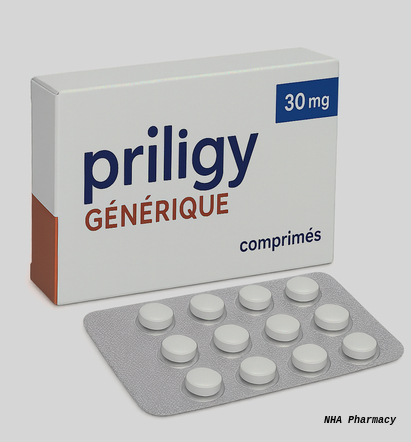
Generic dapoxetine tablets of equivalent dosage strength are available through various international manufacturers. Although generics contain the same active ingredient, excipients, tablet shape and color may differ. All generic presentations authorized by stringent regulatory authorities are considered therapeutically equivalent to branded Priligy.
Price and availability information in the UK
Why prices vary
Price differences reflect brand vs generic, pack size, manufacturer, shipping costs, importation fees and the pharmacy’s overheads. Branded Priligy is typically priced higher than generics due to marketing, research recovery costs and exclusivity. Generic suppliers often offer lower prices by minimizing branding expenses and operating in markets with lower manufacturing costs.
Example pricing (UK online)
| Product | Strength | Pack size | Price | Status | Note |
|---|---|---|---|---|---|
| Generic Dapoxetine | 30 mg | 4 tablets | £12.99 | In Stock | Buy online without prescription* |
| Generic Dapoxetine | 60 mg | 4 tablets | £17.49 | In Stock | Purchase online, fast delivery |
| Branded Priligy | 30 mg | 4 tablets | £35.00 | Prescription Only | Ask GP or pharmacy |
*Purchase subject to personal importation rules and quantity limits. Contact NHA Pharmacy for details and current price.
Generic vs branded Priligy: differences and benefits
Quality and regulation
Generic dapoxetine tablets are approved based on bioequivalence studies demonstrating similar pharmacokinetic profiles to branded Priligy. Regulatory authorities such as the MHRA or EMA require rigorous testing for generics, including batch-to-batch consistency, purity and stability. Quality standards match those of the originator product.
Cost-effectiveness
Generics typically cost 40–70% less than the branded medicine. Lower prices improve access for patients managing recurring PE who require on-demand medication at regular intervals. This can reduce financial barriers to treatment and support continuity of care.
Packaging and patient experience
While the active ingredient and dosage remain the same, differences in tablet size, coating, packaging insert layout and leaflet design may occur. Patients should read the information leaflet carefully for specific instructions, side effects and storage conditions associated with their chosen generic product.
Who can take Priligy? Indications and contraindications
Approved indication
Priligy is indicated for adult men aged 18 to 65 years with a clinical diagnosis of premature ejaculation, defined by short ejaculatory latency, lack of ejaculatory control and associated personal distress. It is not indicated for use in women or children.
Key contraindications
- Hypersensitivity to dapoxetine or excipients;
- Concurrent use of monoamine oxidase inhibitors (MAOIs);
- Significant liver or renal impairment;
- Cardiovascular conditions: ischemic heart disease, arrhythmias, prolonged QT interval;
- History of syncope, seizures or psychiatric disorders on SSRIs;
- Use with thioridazine or other QT-prolonging medicines.
Cautionary factors
Patients with mild to moderate hepatic or renal dysfunction may use Priligy with dose adjustment and careful monitoring. A thorough medical and sexual history should identify any potential risk factors before initiating treatment. Healthcare professionals may need to rule out underlying conditions that can present with ejaculatory dysfunction.
Side effects and tolerability
Common adverse effects
Most side effects are mild to moderate and transient. Commonly reported effects include nausea, dizziness, headache, diarrhea, insomnia and fatigue. Incidence rates vary by dose, with the 60 mg strength associated with slightly higher rates than 30 mg. These effects often diminish after repeated use.
Uncommon and rare effects
Uncommon (<1%) but reported adverse events include syncope, palpitations, visual disturbances and hypersensitivity reactions such as rash or urticaria. Rare serious events may involve serotonin syndrome when combined with other serotonergic agents. Prompt medical assessment is warranted if severe or persistent symptoms arise.
Managing side effects
Starting at a lower dose and taking the tablet with water on an empty stomach can help reduce nausea and dizziness. Patients should avoid rapid changes in posture, particularly standing quickly, to minimize orthostatic hypotension. If side effects persist or worsen, discontinuation or dose adjustment should be considered under medical guidance.
Interactions with other medications
CYP450 metabolism
Dapoxetine is primarily metabolized by CYP2D6 and to a lesser extent by CYP3A4. Strong inhibitors of these enzymes, such as ketoconazole, ritonavir or paroxetine, can increase exposure to dapoxetine and risk of adverse effects. Conversely, inducers like rifampicin may reduce therapeutic levels.
Serotonergic agents
Concomitant use with other SSRIs, SNRIs, tricyclic antidepressants or tramadol can increase the risk of serotonin syndrome, characterized by agitation, hyperreflexia, autonomic instability and altered consciousness. Combination therapy should be avoided unless under strict medical supervision with monitoring protocols.
QT-prolonging medicines
Concurrent use with certain antiarrhythmics (e.g., amiodarone), antipsychotics (e.g., haloperidol) or broad-spectrum antibiotics (e.g., moxifloxacin) increases the risk of QT prolongation. ECG monitoring may be required if co-administration is essential.
Warnings, precautions and special populations
Cardiovascular precautions
Cardiac safety is paramount. Priligy is contraindicated in patients with known structural heart disease, conduction abnormalities or a family history of long QT syndrome. Baseline ECG assessment may be considered in borderline cases to mitigate risk.
Psychiatric considerations
A history of depression, suicidal ideation or other psychiatric disorders warrants careful evaluation. While Priligy’s short half-life reduces central nervous system accumulation, clinicians should monitor mood changes, suicidality and emergence of anxiety symptoms.
Use during recovery from major surgery
Patients recovering from significant surgery or trauma may be at higher risk of orthostatic hypotension. Physicians should evaluate hemodynamic stability before prescribing Priligy.
Long-term use and potential risks
On-demand vs regular dosing
Priligy is designed for on-demand use rather than daily administration. Long-term daily dosing is not recommended due to lack of safety data beyond on-demand regimens. Patients requiring more frequent sexual activity or continuous therapy should undergo regular review.
Dependence and tolerance
There is no evidence of physical dependence with intermittent Priligy use. Psychological reliance can occur if patients perceive ejaculatory control solely through medication. Counselling and behavioural strategies should complement pharmacotherapy to promote healthier coping mechanisms.
Monitoring requirements
Periodic assessment of efficacy, side effects and overall sexual health is recommended. Healthcare providers should review treatment every three to six months to ensure continued appropriateness and safety.
Alternatives to Priligy for premature ejaculation
Behavioural techniques
- Start–stop method;
- Squeeze technique;
- Pelvic floor muscle training;
- Mindfulness and relaxation exercises.
Topical anesthetics
Lidocaine-prilocaine sprays or creams applied to the glans can reduce penile sensitivity. These agents may require a post-application wash-off to prevent transfer to female partners. Onset is rapid, but local irritation is possible.
Other systemic agents
Off-label SSRIs such as paroxetine, sertraline or fluoxetine taken daily have demonstrated efficacy in delaying ejaculation. Tricyclic antidepressants like clomipramine are also used off-label. These options require daily dosing and carry risk of systemic side effects.
Lifestyle, behavioural and dietary considerations
Psychological counselling
Therapeutic support from a psychologist or sex therapist may address anxiety, performance pressure and relational dynamics contributing to PE. Cognitive-behavioural therapy (CBT) can improve self-esteem and coping strategies.
Exercise and general health
Regular aerobic exercise, weight management and pelvic floor strengthening can enhance overall sexual function. Cardiovascular fitness supports autonomic regulation and may positively influence ejaculatory control.
Dietary factors
Avoiding large meals, excessive caffeine and high-fat diets before sexual activity can reduce transient discomfort. Adequate hydration and a balanced intake of vitamins and minerals support nervous system function.
UK legal classification and purchasing online
Prescription Only Medicine (POM)
In the UK, Priligy remains a POM. Pharmacists may not supply Priligy without a valid prescription from an EU/EEA prescriber. Overseas pharmacies frequently operate under different regulations, offering personal importation services. Patients ordering Priligy generic online should ensure they comply with UK customs and personal use allowances.
Importation rules
The UK permits individuals to import up to a three-month supply of prescription medication without a UK prescription for personal use. Quantities above this threshold may be seized by customs or require additional paperwork. Importation via courier or postal service is subject to random checks by Border Force.
Secure ordering and payment
Reputable online pharmacies employ encrypted payment gateways, SSL certificates and data protection measures. Look for “https://” in the URL, clear contact details, verifiable pharmacy credentials and transparent terms of sale, delivery and returns.
Additional information and support resources
Professional advice
This article provides general information. It does not replace medical advice. Speak to your GP, urologist or a qualified sexual health specialist before starting any medication for premature ejaculation.
Reliable information sources
- British National Formulary (BNF);
- National Institute for Health and Care Excellence (NICE);
- British Association for Sexual Health and HIV (BASHH);
- Electronic Medicines Compendium (eMC).
Support organisations
Men experiencing premature ejaculation can seek help from support groups and sexual health charities such as the Family Planning Association (FPA), Relate and Sexual Aids Association. Confidential helplines and online counselling services can provide additional emotional support.
For questions about ordering Priligy generic without prescription, pricing, delivery or any other concerns, please contact the NHA Pharmacy team at Unit 23, Newton House, Northampton Science Park, Kings Park Road, Moulton Park Industrial Estate, Northampton NN3 6LG, or call +44 1604 654214.