
Order clomid fast delivery online
- Is Clomid 50 mg available without prescription in the UK?
- What does Prescription Only Medicine mean in the UK?
- General information about Clomid
- How Clomid works to induce ovulation
- Price and availability information
- Strengths, formulations and pack types
- Indications: infertility, PCOS and other uses
- UK legal classification: POM
- Alternatives for ovulation induction
- Clomid compared with other fertility medicines
- Lifestyle and diet considerations for fertility
- Side effects and tolerability
- Long-term use and monitoring
- Warnings, contraindications and interactions
- Additional information about generic Clomid
Is Clomid 50 mg available without prescription in the UK?
Clomid (clomiphene citrate) 50 mg is classified as a Prescription Only Medicine (POM) in the United Kingdom. This means it cannot be legally supplied without a prescription from an authorised healthcare professional. Online pharmacies offering Clomid without prescription may operate outside UK regulations or require a valid prescription uploaded during purchase. Always ensure compliance with MHRA guidelines when buying Clomid online.
What does Prescription Only Medicine mean in the UK?
In the UK, Prescription Only Medicines (POMs) are medicines that can only be supplied to patients with a valid prescription issued by an appropriate practitioner. This classification ensures that medicines with potential risks, complex dosing regimens or significant side effects are used under medical supervision. POM status applies to Clomid due to its hormonal action, potential for multiple pregnancies and need for treatment monitoring.
General information about Clomid
What is Clomid?
Clomid is a brand name for clomiphene citrate, a selective estrogen receptor modulator (SERM). It is widely used to induce ovulation in women who do not ovulate regularly or at all, such as those with polycystic ovary syndrome (PCOS). By blocking estrogen receptors, Clomid stimulates the hypothalamus to release gonadotropin-releasing hormone (GnRH), which in turn prompts the pituitary gland to secrete luteinizing hormone (LH) and follicle-stimulating hormone (FSH), triggering follicular development.
What is the active ingredient?
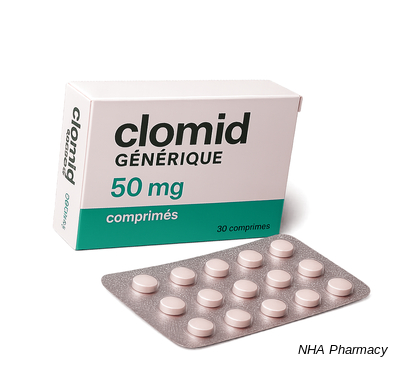
The active pharmaceutical ingredient in Clomid is clomiphene citrate. It is available in generic form under various brand names. Generic Clomid must meet the same regulatory standards for quality, efficacy and safety as the branded product, though inactive ingredients and appearance may vary.
Why is Clomid taken orally?
Clomiphene citrate is formulated as oral tablets to allow convenient self-administration. After ingestion, it is absorbed in the gastrointestinal tract, undergoes hepatic metabolism and exerts its effect on the hypothalamic-pituitary-ovarian axis. Tablet formulation ensures precise dosing and reliable bioavailability when taken as directed.
Is Clomid an androgen or estrogen?
Clomid is neither an androgen nor an estrogen; it is a SERM that antagonises estrogen receptors in the hypothalamus. By reducing negative feedback from circulating estrogens, Clomid promotes the release of gonadotropins needed for ovarian follicle maturation and ovulation.
Is Clomid used for male infertility?
Off-label, Clomid may be prescribed for male infertility associated with hypogonadotropic hypogonadism. By modulating the hormonal feedback loop, Clomid can raise endogenous testosterone levels and improve sperm parameters in selected cases, though this use requires specialist assessment and is not covered by non-prescription supply.
How Clomid works to induce ovulation
Mechanism of action
Clomiphene citrate binds to estrogen receptors in the hypothalamus, blocking the inhibitory effect of estrogen and resulting in an increased release of GnRH. This hormone stimulates the anterior pituitary gland to secrete FSH and LH, promoting follicular growth in the ovaries. A surge in LH mid-cycle typically triggers ovulation approximately 5–10 days after treatment completion.
Who might benefit?
Primary candidates for Clomid therapy include women with anovulatory infertility or irregular cycles, especially those with PCOS. Patients with unexplained infertility may also receive Clomid as part of initial treatment. A full fertility evaluation should precede Clomid use to rule out tubal, uterine or male factor issues.
When does Clomid start working?
Treatment typically begins on day 2–5 of a natural menstrual cycle, with 50 mg taken daily for five consecutive days. Follicular monitoring via ultrasound may begin five days after the last dose to assess response. Ovulation usually occurs 5–12 days after the final dose, and patients are often advised to time intercourse or insemination accordingly.
Monitoring and response assessment
Ultrasound monitoring and serum hormone measurements guide Clomid therapy. Follicle size, endometrial thickness and LH surge detection help optimise timing for conception. In some cases, dose adjustments or cycle cancellation may occur if response is suboptimal or excessive.
Price and availability information
How much does Clomid cost in the UK?
The retail price of Clomid varies by manufacturer, pack size and pharmacy. Prescription charges apply in NHS settings, while private purchase prices depend on pharmacy pricing policies. Generic Clomid often offers cheaper options compared to branded Clomid. For current price and availability, contact NHA Pharmacy.
Why can prices vary between products?
Price differences reflect factors such as brand vs generic status, pack size, manufacturer agreements, pharmacy discounts and distribution costs. A lower price does not imply inferior quality when products are authorised equivalents, but always confirm authenticity and regulatory compliance.
| Example | Strength | Formulation | Price | Status | Note |
|---|---|---|---|---|---|
| Branded Clomid | 50 mg | Tablets, 5 x 10 | £45.00 | Prescription only | MHRA approved |
| Generic Clomiphene | 50 mg | Tablets, 5 x 10 | £30.00 | Prescription only | Contact NHA Pharmacy for price |
Strengths, formulations and pack types
What strengths of Clomid exist?
Clomid is commonly available in 50 mg tablets. Some manufacturers may produce 25 mg tablets or 100 mg strengths, though these are less frequent. Always check the pack label for the exact strength and dosage instructions.
What formulations are available?
Clomid is supplied as immediate-release oral tablets. All presentations share the same active ingredient but may vary in excipients, coating and tablet imprint. The authorised product information provides full details on each formulation.
Why does pack size matter?
Pack size can influence treatment duration and legal classification for supply. A standard pack of 5 x 10 tablets covers multiple cycles when dosing at 50 mg daily for five days per cycle. Specialist prescriptions may include larger quantities for repeated cycles under monitoring.
| Feature | Why it matters |
| Active ingredient | Defines the medicine’s pharmacological action |
| Strength | Indicates dosage per tablet |
| Formulation | Affects absorption and tolerability |
| Pack size | Determines treatment length and supply conditions |
| Legal category | Governs prescription requirements |
Are generic and branded Clomid identical?
When authorised as equivalent, generic and branded Clomid contain the same active substance at the stated strength and are expected to produce the same clinical effect. Excipients and tablet appearance may differ but do not affect efficacy.
Indications: infertility, PCOS and other uses
PCOS-related anovulation
Women with polycystic ovary syndrome often experience irregular or absent ovulation. Clomid can restore ovulatory cycles by countering estrogen’s feedback inhibition, making it a first-line pharmacological treatment for PCOS-related infertility.
Unexplained infertility
In cases where standard investigations reveal no clear cause for infertility, Clomid may be used empirically to enhance ovulation and increase pregnancy rates. Treatment should occur in the context of a comprehensive fertility assessment.
Male infertility
Off-label use in men aims to increase endogenous testosterone and improve sperm production. Evidence is mixed, and specialist urology or endocrinology input is recommended before initiating Clomid therapy in male patients.
Other off-label uses
Clomid has been explored for conditions such as luteal phase defect and hypogonadism. However, off-label prescribing requires careful consideration of risk-benefit and patient-specific factors under specialist supervision.
UK legal classification: POM
What is a POM?
A Prescription Only Medicine (POM) can only be dispensed with a valid prescription from an authorised prescriber. Clomid’s hormonal effects and potential risks, such as ovarian hyperstimulation and multiple pregnancy, warrant this classification.
Is Clomid OTC in the UK?
No. Clomid is not available over-the-counter. Attempts to buy Clomid cheap or without prescription online may bypass UK regulations and pose safety risks. Always use legitimate UK pharmacies and provide a valid prescription.
Who regulates POM classification?
The Medicines and Healthcare products Regulatory Agency (MHRA) oversees medicine classification in the UK, including POM status, licensing, reclassification and safe supply standards.
Alternatives for ovulation induction
Letrozole
An aromatase inhibitor used off-label for ovulation induction, particularly in PCOS. Letrozole may offer higher live birth rates in certain populations, but requires specialist prescribing and monitoring.
Metformin
Used primarily in insulin-resistant PCOS, metformin can improve metabolic parameters and ovulation when combined with lifestyle changes, though its ovulation induction efficacy is lower than Clomid.
Gonadotropins
Injectable FSH and LH preparations provide direct ovarian stimulation. They carry a higher risk of ovarian hyperstimulation syndrome (OHSS) and multiple pregnancy, requiring intensive monitoring.
Lifestyle modifications
Weight management, dietary adjustments, exercise and stress reduction can restore ovulation in some women with PCOS or unexplained anovulation, sometimes reducing the need for pharmacological intervention.
Clomid compared with other fertility medicines
Clomid vs Letrozole
Both drugs induce ovulation but act via different mechanisms. Letrozole inhibits aromatase, lowering estrogen synthesis, while Clomid blocks estrogen receptors centrally. Studies suggest letrozole may yield higher live birth rates in PCOS, though Clomid remains widely used.
Clomid vs Gonadotropins
Gonadotropins provide more predictable follicular response but require injections and carry greater OHSS and multiple pregnancy risk. Clomid’s oral administration and safety profile make it a first-line agent for many women.
| Feature | Clomid | Letrozole | Gonadotropins |
| Drug class | SERM | Aromatase inhibitor | Recombinant hormones |
| Main mechanism | Estrogen receptor antagonist | Inhibits estrogen synthesis | Direct FSH/LH stimulation |
| Administration | Oral | Oral | Injectable |
| Monitoring | Ultrasound | Ultrasound | Intensive monitoring |
| Multiple pregnancy risk | 5–12% | 3–8% | 15–20% |
Is one agent better?
Choice depends on patient diagnosis, prior treatment response, side effect profile and healthcare provider experience. Individualised treatment planning optimises outcomes and minimises risks.
Lifestyle and diet considerations for fertility
Body weight and BMI
Both overweight and underweight can impair ovulation. Achieving a healthy BMI through diet and exercise may improve Clomid response and overall fertility.
Dietary factors
A balanced diet rich in whole grains, lean protein, fruits and vegetables supports hormonal balance. Limiting processed foods, refined sugars and trans fats may enhance ovulatory function.
Exercise and stress
Moderate exercise improves insulin sensitivity and hormone regulation. High-intensity training or chronic stress may disrupt menstrual cycles. Mind-body interventions such as yoga and mindfulness can support fertility.
Side effects and tolerability
Common side effects
| Area | Examples |
| Vasomotor | Hot flashes, night sweats |
| Visual | Blurred vision, spots or flashes |
| Neurological | Headache, dizziness |
| Gastrointestinal | Nausea, abdominal discomfort, bloating |
| Psychiatric | Mood swings, irritability |
Ovarian hyperstimulation
Although less common with Clomid than gonadotropins, multiple follicles can develop, increasing the risk of OHSS. Monitoring and cycle cancellation criteria help mitigate severe OHSS.
Why do leaflets list rare effects?
Regulatory guidelines require listing all known or suspected adverse reactions, regardless of frequency, to inform patients and healthcare professionals of potential safety issues.
Are long-term side effects different?
Clomid is typically used for up to six cycles. Prolonged use beyond recommended limits may increase risks such as ovarian enlargement or functional ovarian cysts. Treatment duration should be reviewed regularly.
Long-term use and monitoring
Recommended cycle limits
Most guidelines recommend no more than six ovulation induction cycles with Clomid due to diminishing returns and safety considerations. Continued infertility after this period warrants specialist referral.
Monitoring parameters
Cyclical ultrasound, serum estradiol levels and endometrial assessment guide safe and effective use. Monitoring helps detect hyper-response, thin endometrium or poor follicle development.
When to stop Clomid
No clinical response after three cycles, development of ovarian cysts, significant side effects or abnormal monitoring findings should prompt treatment review and alternative strategies.
Warnings, contraindications and interactions
Who should be cautious?
- Women with liver disease or hepatic impairment;
- Patients with ovarian cysts unrelated to PCOS;
- Individuals with uncontrolled thyroid or adrenal dysfunction;
- Patients with visual disturbances or retinopathy;
- Those with a history of thromboembolic disorders;
- Women with uterine fibroids or endometriosis affecting fertility.
Drug interactions
Clomid may interact with hormones such as estrogen or testosterone. Co-administration with tamoxifen or other SERMs is not recommended. Always review concomitant medications for potential CYP metabolism interactions.
Pregnancy considerations
Clomid is only used to induce ovulation. Once pregnancy is confirmed, Clomid should be discontinued. Animal studies show no teratogenicity at therapeutic doses, but human data remain limited.
Vision changes
Visual disturbances may indicate toxicity. Patients must report any changes in vision immediately, and discontinuation of Clomid should be considered to prevent permanent damage.
Multiple pregnancy risk
Clomid increases the chance of twins or higher-order multiples. Couples should be counselled on risks associated with multiple gestation, including preterm birth and obstetric complications.
Additional information about generic Clomid
What does “generic Clomid” mean?
Generic Clomid contains clomiphene citrate identical to the reference branded product. Regulatory authorities require evidence of bioequivalence and quality, ensuring similar efficacy and safety profiles.
Why can product leaflets differ?
Different manufacturers may have variations in excipients, recommended monitoring schedules or proprietary name. Always read the patient information leaflet supplied with each medicine.
Where can information be verified?
Trusted sources include the MHRA, the electronic Medicines Compendium (eMC) and qualified healthcare professionals such as pharmacists and fertility specialists.
Does this information replace advice from a pharmacist?
No. This page provides general information by NHA Pharmacy (Unit 23, Newton House, Northampton Science Park, Kings Park Road, Moulton Park Industrial Estate, Northampton NN3 6LG). For personalised advice on purchasing Clomid online, dosage, safety and price, consult the pharmacy team or your prescribing clinician.