
Purchase priligy online without prescription
- Is priligy available without prescription in the UK?
- What does Pharmacy medicine mean in the UK?
- General information about priligy
- How priligy works
- Price and availability information
- Strengths, formulations and pack types
- Indications and off-label uses
- UK legal classification: POM, P and GSL
- Alternatives for premature ejaculation
- Priligy compared with other treatments
- Dosage, administration and timing
- Side effects and tolerability
- Long-term use and safety considerations
- Warnings, contraindications and interactions
- Additional information about priligy
Is priligy available without prescription in the UK?
Priligy (dapoxetine) is classified as a Prescription Only Medicine (POM) in the United Kingdom and cannot be lawfully supplied without a valid prescription. Despite the proliferation of online pharmacies offering “buy priligy online without prescription”, UK legislation requires that a qualified healthcare professional assesses the suitability of dapoxetine for each individual before supply. Self-medicating with priligy without clinical oversight can pose risks, including inappropriate dosing, unrecognized contraindications and dangerous interactions with other medicines or underlying conditions.
Some international or unregulated websites may advertise priligy as available without prescription, but such imports may not meet UK safety and quality standards. NHA Pharmacy follows MHRA guidelines and only supplies priligy after receiving a legitimate prescription or through an accredited online clinical consultation process that complies with UK law.
What does Pharmacy medicine mean in the UK?
The UK categorises human medicines into three main legal classifications: Prescription Only Medicines (POM), Pharmacy medicines (P) and General Sales List medicines (GSL). Although priligy is not a Pharmacy medicine and requires prescription-only status, understanding the P and GSL categories is important for patients exploring other over-the-counter options for sexual health issues.
– Prescription Only Medicine (POM): Supply strictly by prescription from a registered prescriber.
– Pharmacy medicine (P): Can be sold without a prescription but only under the supervision of a pharmacist.
– General Sales List medicine (GSL): Can be sold through multiple retail outlets without pharmacist supervision.
Priligy, being a POM, cannot be supplied in pharmacies without a prescription. Any advertised “without prescription” supply must adhere to strict online prescribing guidelines, ensuring patient safety and legal compliance.
General information about priligy
What is priligy?
Priligy is the brand name for dapoxetine, a fast-acting selective serotonin reuptake inhibitor (SSRI) specifically developed to treat premature ejaculation (PE) in men aged 18 to 64. Unlike other SSRIs used as antidepressants, dapoxetine has a rapid absorption and elimination profile, making it suitable for on-demand use shortly before sexual activity.
Active ingredient and pharmacology
The active pharmaceutical ingredient in Priligy is dapoxetine hydrochloride. It increases the action of serotonin in the synaptic cleft by inhibiting its reuptake into presynaptic neurons, which in turn modulates ejaculatory latency through central neuronal pathways. Dapoxetine’s pharmacokinetic properties—peak plasma concentrations within 1–2 hours and a half-life of around 19 hours in healthy subjects—allow for single-dose administration rather than daily dosing.
Why is dapoxetine unique?
Dapoxetine is distinct among SSRIs due to its rapid onset of action and short half-life. Traditional SSRIs used off-label for PE (such as paroxetine or sertraline) require daily administration and several weeks to reach maximum effect. Priligy’s design as an on-demand therapy offers flexibility, lower cumulative exposure and a reduced side effect profile compared to chronic SSRI therapy.
How priligy works
Mechanism of action
Priligy’s efficacy in delaying ejaculation is primarily attributed to its serotonergic activity on central pathways. By blocking the serotonin transporter, dapoxetine enhances serotonergic neurotransmission at the synaptic cleft, particularly affecting 5-HT receptors involved in ejaculatory control. This modulation delays the ejaculatory reflex and increases intravaginal ejaculatory latency time (IELT).
Pharmacokinetics: absorption and elimination
After oral dosing, dapoxetine is rapidly absorbed with a tmax of 1–1.5 hours under fasting conditions. Food may delay absorption slightly but does not significantly affect overall bioavailability. Metabolism occurs mainly via CYP2D6 and CYP3A4 in the liver. The short elimination half-life distinguishes dapoxetine from other SSRIs, reducing the risk of accumulation and facilitating on-demand single-dose use.
Onset and duration of effect
Clinical studies demonstrate that Priligy taken 1–3 hours before sexual activity can significantly prolong IELT, often by two- to threefold compared with placebo. The effect window corresponds with plasma concentration peaks. Patients are advised not to take more than one dose within 24 hours.
Comparison with chronic SSRI use
Unlike daily SSRIs, which require weeks to achieve steady-state concentrations, Priligy’s immediate-release gastro-resistant tablet formulation is optimized for acute dosing. This avoids the need for long-term SSRI therapy, minimizing side effects such as weight gain, sexual dysfunction or emotional blunting associated with chronic use.
Price and availability information
How much does priligy cost in the UK?
Priligy pricing varies by supplier, pack size and whether generic dapoxetine is used. This page provides indicative information only. For current prices, please contact NHA Pharmacy via telephone or visit our website. We offer competitive prices for generic Priligy with discreet delivery across the UK.
Why do prices vary?
Retail price differences can result from brand versus generic products, pack size, purchasing agreements, and whether additional clinical services (such as online consultations) are included. A lower price for generic dapoxetine does not imply inferior quality; generics must meet stringent MHRA standards.
| Example | Strength | Pack size | Price | Status | Note |
|---|---|---|---|---|---|
| Priligy (brand) | 30 mg | 4 tablets | £45.00 | Prescription required | Standard branded dapoxetine |
| Generic dapoxetine | 30 mg | 4 tablets | £25.00 | Prescription required | Equivalent active ingredient |
| Priligy (brand) | 60 mg | 4 tablets | £55.00 | Prescription required | Higher strength option |
Strengths, formulations and pack types
Available strengths
Priligy is marketed in two strengths: 30 mg and 60 mg immediate-release tablets. The 30 mg dose is often used for initial therapy, while the 60 mg dose may be prescribed if the lower dose is insufficient and well tolerated.
Formulation details
Both strengths are formulated as immediate-release tablets designed to dissolve quickly in the gastrointestinal tract. Tablets should be swallowed whole with water and not chewed, broken or crushed to preserve the release characteristics.
Pack sizes and treatment duration
Packs typically contain 4 or 8 tablets. As an on-demand therapy, treatment duration depends on individual needs rather than a fixed course. Prescribers may supply multiple packs to cover anticipated intervals of use.
Generic versus branded products
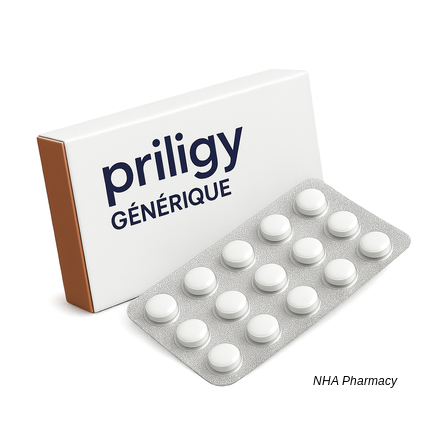
Generic dapoxetine products contain the same active dapoxetine hydrochloride at the stated strength and must demonstrate bioequivalence to Priligy. Differences may include excipients, tablet shape, colour and packaging, but therapeutic effect and safety profile are equivalent.
Indications and off-label uses
Primary indication: premature ejaculation
Priligy is indicated for the treatment of premature ejaculation in men aged 18–64. Premature ejaculation is typically defined by ejaculation that occurs within about one minute of vaginal penetration, recurrent inability to delay ejaculation, and associated distress.
Off-label considerations
While Priligy is approved for PE, some clinicians may consider dapoxetine for men with other ejaculatory concerns or as part of combination therapy for sexual dysfunction. Off-label use should be guided by specialist advice and based on a comprehensive assessment of risks and benefits.
Not indicated for other sexual disorders
Priligy is not licensed to treat erectile dysfunction (ED), low libido or other sexual performance issues unrelated to ejaculatory latency. For ED, PDE5 inhibitors such as sildenafil or tadalafil may be more appropriate.
Assessment before treatment
A proper assessment of sexual history, mental health, relationship factors and potential contributing medical conditions is essential before initiating Priligy. This ensures appropriate indication, dosing and monitoring.
UK legal classification: POM, P and GSL
Why is priligy a POM?
Priligy’s classification as a Prescription Only Medicine reflects the need for professional assessment of cardiovascular status, concomitant medications, psychiatric history and contraindications before use. Dapoxetine’s potential for syncope, dizziness and interactions warrants medical oversight.
Not a Pharmacy or GSL medicine
Unlike some over-the-counter sexual health products (e.g., topical anesthetics), Priligy cannot be sold as a Pharmacy (P) medicine or General Sales List (GSL) medicine. This legal categorisation ensures safe prescribing practices under MHRA regulations.
How to obtain a prescription
Patients may obtain a prescription through their GP or via accredited online clinics that comply with MHRA and General Pharmaceutical Council standards. NHA Pharmacy offers a telemedicine service where patients complete a structured medical questionnaire, reviewed by a UK-registered prescriber prior to dispensing.
Alternatives for premature ejaculation
Topical anesthetics
Local desensitising agents (e.g., lidocaine-prilocaine creams or sprays) can reduce penile sensitivity and delay ejaculation. They may be used on-demand but carry a risk of transference to partners, potentially causing local irritation or numbness.
Psychosexual therapy and behavioural techniques
Non-pharmacological approaches such as the stop–start method, squeeze technique, cognitive behavioural therapy (CBT) and couples counselling can address psychological and relationship factors contributing to PE. These interventions may provide longer-lasting benefits when combined with drug therapy.
Daily SSRIs off-label
SSRIs such as paroxetine, sertraline or fluoxetine have been used off-label for PE due to their ejaculatory delay effects. However, these require daily dosing and are associated with a broader side effect profile including sexual dysfunction, emotional blunting and withdrawal symptoms.
Other pharmacological options
Tramadol, an opioid analgesic, has shown ejaculatory delay properties but is not licensed for PE, and misuse potential limits its utility. Alternative medications should only be considered under specialist supervision.
Priligy compared with other treatments
Priligy vs topical anesthetics
Priligy offers systemic serotonergic modulation without the risk of transference. Topical anesthetics act locally but may reduce sexual pleasure, cause skin reactions and require precise timing. Priligy’s on-demand systemic approach avoids these local side effects.
Priligy vs chronic SSRIs
Daily SSRIs require sustained dosing and carry risks of weight gain, emotional changes and sexual side effects. Priligy’s short half-life and single-use dosing reduce long-term exposure, making it favorable for men without comorbid depression or anxiety.
Priligy vs PDE5 inhibitors
PDE5 inhibitors are indicated for erectile dysfunction, not premature ejaculation. However, some patients with mixed ED and PE may use combination therapy under specialist guidance. Priligy does not improve erectile function directly.
Choosing the right option
Selection depends on symptom severity, patient preference, side effect tolerability and comorbidities. A holistic approach combining pharmacotherapy and behavioural strategies often yields the best outcomes.
Dosage, administration and timing
Recommended dosing schedule
Priligy should be taken as a single tablet 1–3 hours before anticipated sexual activity. Do not exceed one dose within a 24-hour period. The recommended starting dose is 30 mg; if well tolerated but insufficiently effective, a dose increase to 60 mg may be considered.
Administration instructions
Swallow tablets whole with a full glass of water. Do not crush, chew or split tablets. Food may delay absorption, so allowance for up to one additional hour for onset of action may be advisable if taken with meals.
Missed dose
As Priligy is used on-demand, there is no defined missed-dose protocol. If sexual activity is planned, patients should take their next dose at least 24 hours after the previous dose.
Self-monitoring and follow-up
Patients should track ejaculatory latency changes and any adverse effects. A follow-up consultation after 4–8 weeks can assess efficacy, tolerability and need for dose adjustment or alternative therapy.
Side effects and tolerability
Common side effects
Side effects occur in a dose-dependent manner and often resolve within a few hours after dosing. Commonly reported effects include:
| System | Side effects |
| Nervous system | Dizziness, headache, somnolence |
| Gastrointestinal | Nausea, diarrhoea, abdominal cramps |
| Cardiovascular | Transient palpitations, syncope (rare) |
| Psychiatric | Insomnia, agitation (uncommon) |
Serious adverse reactions
Although rare, serious adverse events may include transient loss of consciousness (syncope), significant orthostatic hypotension and allergic reactions. If severe dizziness, chest pain or breathing difficulties occur, seek immediate medical attention.
Dose-related tolerability
Increasing from 30 mg to 60 mg can improve efficacy in some patients but may heighten the frequency or intensity of side effects. The decision to escalate should balance symptomatic benefit and tolerability.
Managing side effects
If mild side effects occur, remaining seated or lying down until symptoms pass can reduce the risk of falls. Taking Priligy with a light snack may help mitigate gastrointestinal discomfort. Persistent or severe side effects warrant discussion with a healthcare professional.
Long-term use and safety considerations
On-demand use versus chronic therapy
Priligy is intended for on-demand treatment rather than continuous daily therapy. Chronic daily dosing is not recommended due to lack of data on long-term safety, potential for tolerance and risk of withdrawal symptoms.
Potential risks of frequent use
Frequent on-demand dosing—more than three times per week—may increase cumulative exposure and the likelihood of adverse events such as dizziness, nausea and syncope. Patients should discuss usage patterns with their prescriber to determine optimal frequency.
Monitoring requirements
Men with recurrent or worsening symptoms should undergo periodic review, including cardiovascular assessment, evaluation of concomitant medications and consideration of lifestyle or behavioural interventions to reduce reliance on pharmacotherapy.
Risk minimisation
A shared decision-making approach, clear counselling on dose limits, and recognition of contraindications are vital to minimise risk. Educating patients about warning signs and when to seek help enhances safety during prolonged Priligy use.
Warnings, contraindications and interactions
Contraindications
- Known hypersensitivity to dapoxetine or excipients;
- Concurrent use of monoamine oxidase inhibitors (MAOIs);
- Use of thioridazine or other medications with pro-arrhythmic risk;
- Severe hepatic impairment;
- History of syncope or significant cardiovascular disease;
- Concomitant use of potent CYP3A4 inhibitors (e.g., ketoconazole, ritonavir);
- Major psychiatric disorders under active treatment.
Drug interactions
Dapoxetine is metabolised by CYP2D6 and CYP3A4. Inhibitors of these enzymes can increase dapoxetine levels, raising the risk of adverse reactions. Concomitant serotonergic drugs (SSRIs, SNRIs, triptans) may increase the risk of serotonin syndrome, a potentially life-threatening condition.
Alcohol and other CNS depressants
Alcohol can potentiate dapoxetine’s central nervous system effects, increasing dizziness and risk of syncope. Co-administration with other CNS depressants (e.g., benzodiazepines, opioids) should be approached with caution.
Use in special populations
Priligy is not recommended for use in adolescents under 18 or elderly men over 64 due to insufficient data. Caution is advised in patients with mild to moderate hepatic impairment, with a possible dose reduction to 30 mg.
Pregnancy and breastfeeding
Priligy is not indicated in women. There is no clinical experience with dapoxetine during pregnancy or lactation; therefore, its use is contraindicated in women.
Additional information about priligy
What does “generic dapoxetine” mean?
A generic formulation contains the same active ingredient, dapoxetine hydrochloride, at equivalent strength to the reference medicine (Priligy) and must demonstrate bioequivalence. Packaging, tablet appearance and excipients may differ.
Why can products have different leaflets?
Different manufacturers may obtain separate marketing authorisations with specific excipients, pack sizes and legal categories, resulting in variations in patient information leaflets regarding warnings, shelf life and storage instructions.
Storage and handling
Store tablets in the original blister pack at room temperature (below 25 °C), protected from moisture and direct sunlight. Keep out of reach of children.
Verifying medicine information
Official product information can be verified via the MHRA website, the electronic Medicines Compendium (eMC) or by consulting UK-registered pharmacists. Always check the leaflet supplied with the medicine for the most accurate information.
Does this information replace professional advice?
No. This page is intended for general information only and is published by NHA Pharmacy (Unit 23, Newton House, Northampton Science Park, Kings Park Road, Moulton Park Industrial Estate, Northampton NN3 6LG). For personalised advice on priligy, speak to our pharmacy team or your GP.